School Uniform Shoe List
Generic school shoe requirements based on uniform guidelines.
School Uniform Guidelines
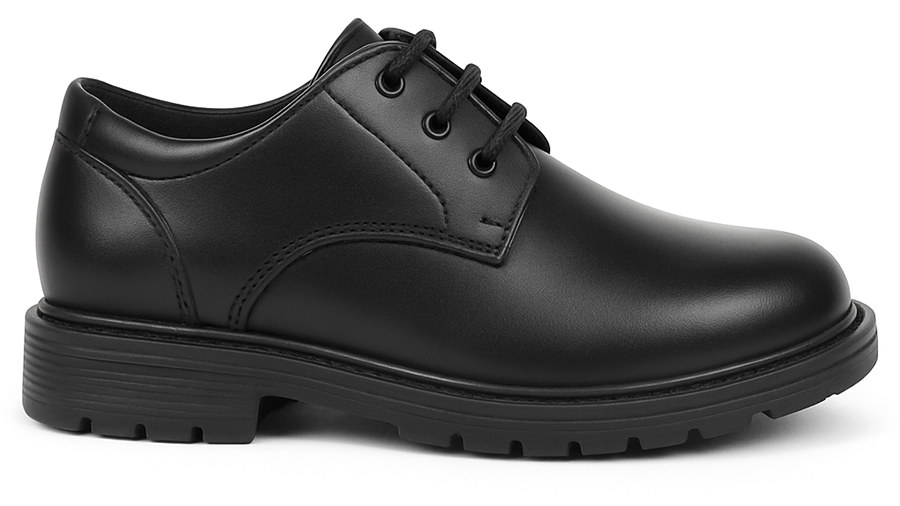
Black, brown or navy shoes or sandals (suitable for playground use). No boots which extend above the ankle. No sling backs or open toes. No significant/highly visible branding/logos. Laced shoes when a child can dress independently. Boots may be worn to and from school in snowy/icy weather provided school shoes are sent in for changing.
Trainers or plimsolls - ideally plain black (no significant/high visible branding/logos).
Boys Shoes 2
View All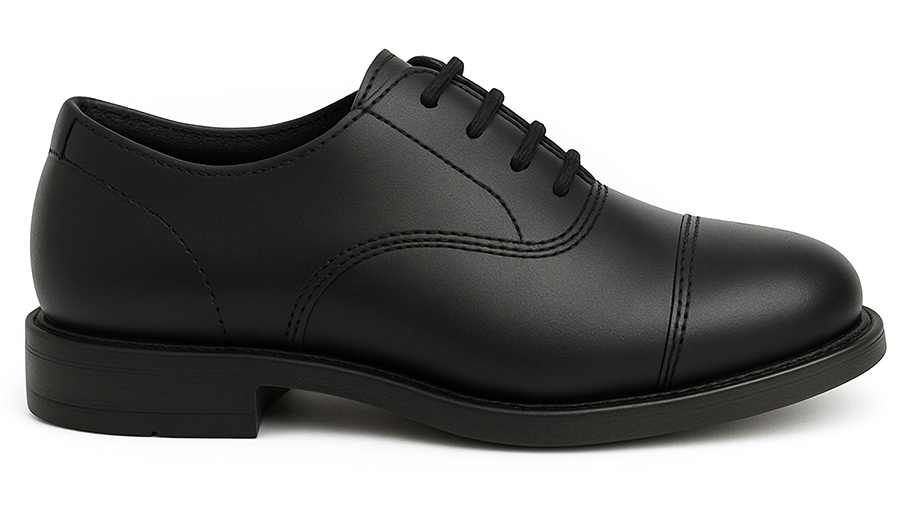
Sports Shoes 1
View All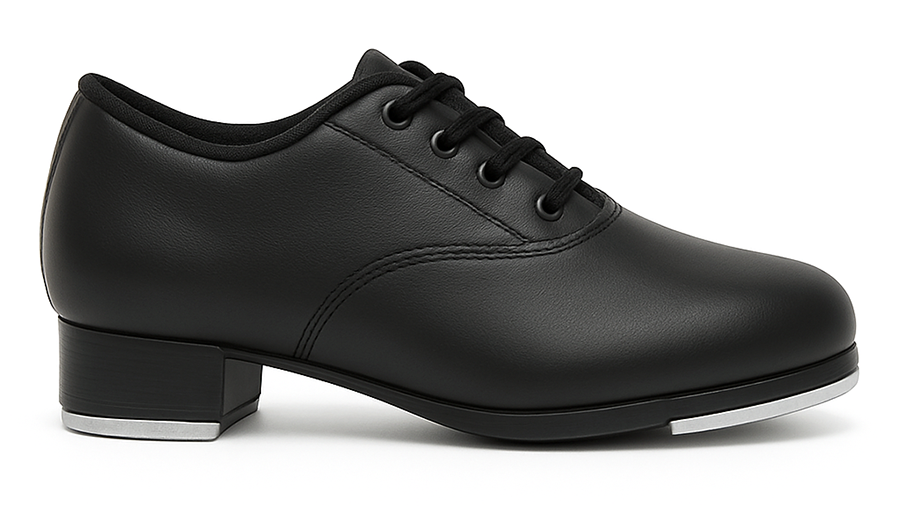
Not Permitted
- Slip-on shoes
- Elastic bars
- Trainers
- Canvas pumps
- Boots
- Open-toe shoes
- High heels
- Velcro fastenings
- Buckles
- Patent leather
- Suede
- Coloured soles
- Logos
- Platform shoes
- Wedges
- Equestrian
- Rugby
- Football
School Shoe Fitting Guidelines
Children's feet grow quickly - they may need new shoes every 3-4 months depending on age and activity level.
Check for Proper Fit:
- Allow approximately half an inch (1.3 cm) of space between the longest toe and the front of the shoe
- Ensure the width is comfortable with no pinching or bulging
- The heel should fit snugly without slipping
- Shoes should be comfortable immediately - no "breaking in" period needed
When to Replace:
- When there's less than half an inch of growing room
- If the shoe shows signs of wear or damage
- If your child complains of discomfort or pain
- Check regularly for redness or blisters on your child's feet
Measuring Tips:
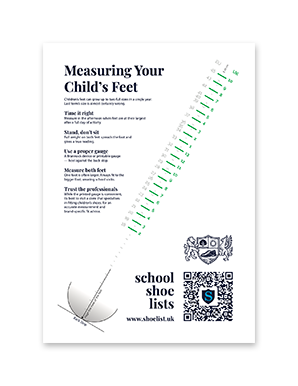
- Measure both feet while standing
- Measure at the end of the day when feet are at their largest
- Have your child wear the type of socks they'll wear with the shoes
- Use the measuring gauge on page 2 only if you can't get the shoes fitted professionally
- Shoes from different brands may have different sizing, so it's important to try them on