Buying Guide
The Complete Guide to Choosing School Shoes
Our honest, down-to-earth advice on buying school shoes that keep within uniform policy, look after growing feet and see out a full term, for girls, boys and PE alike.
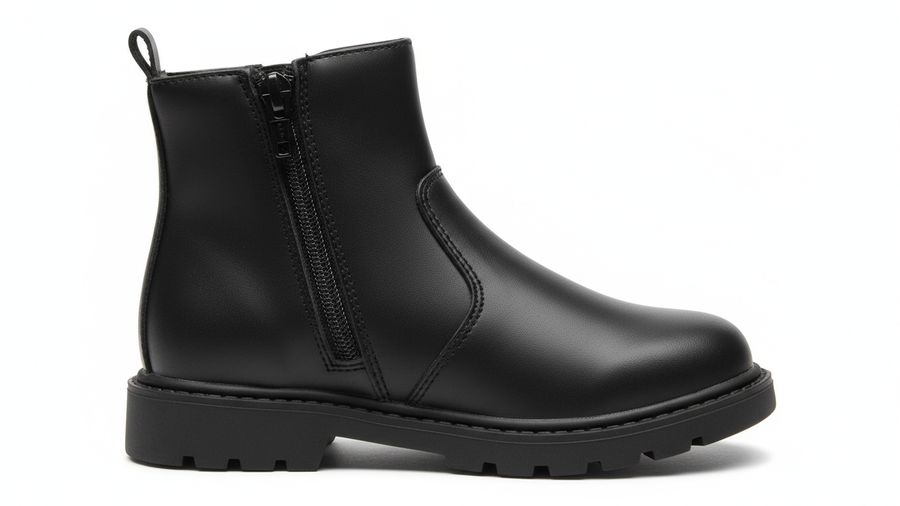
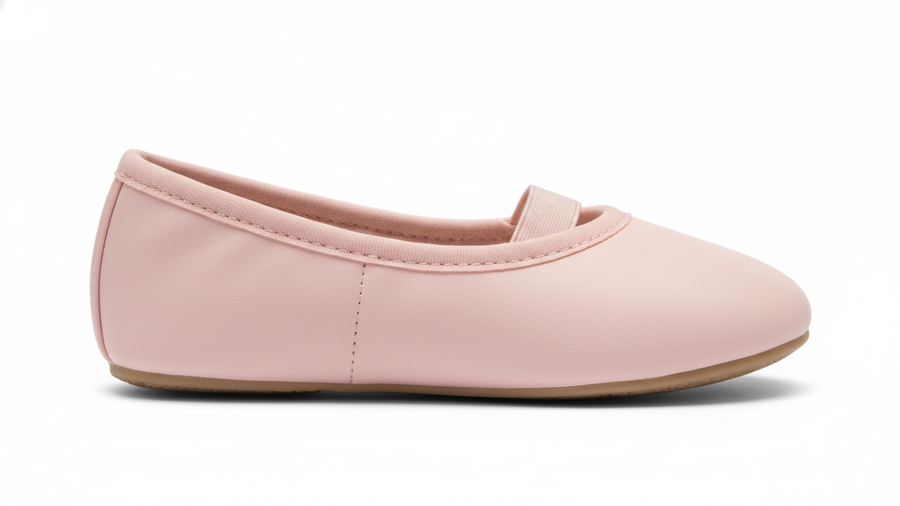
Girls’ School Shoes
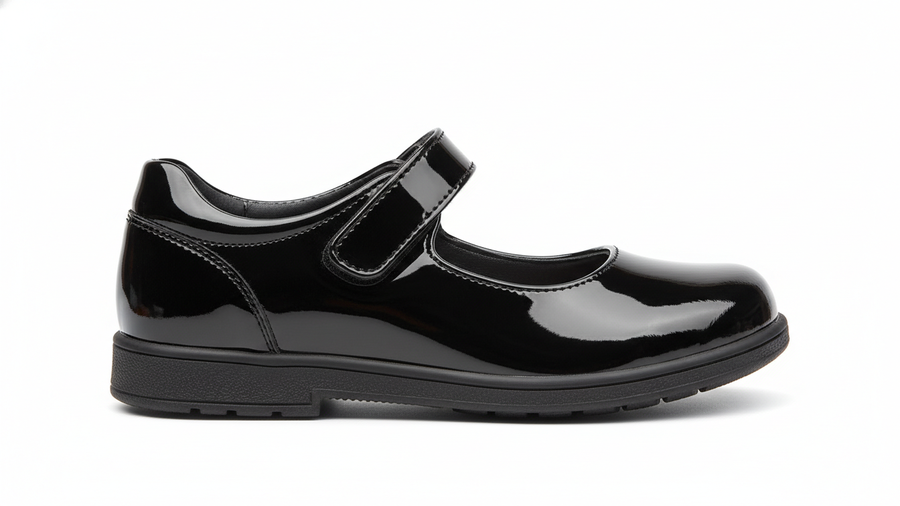
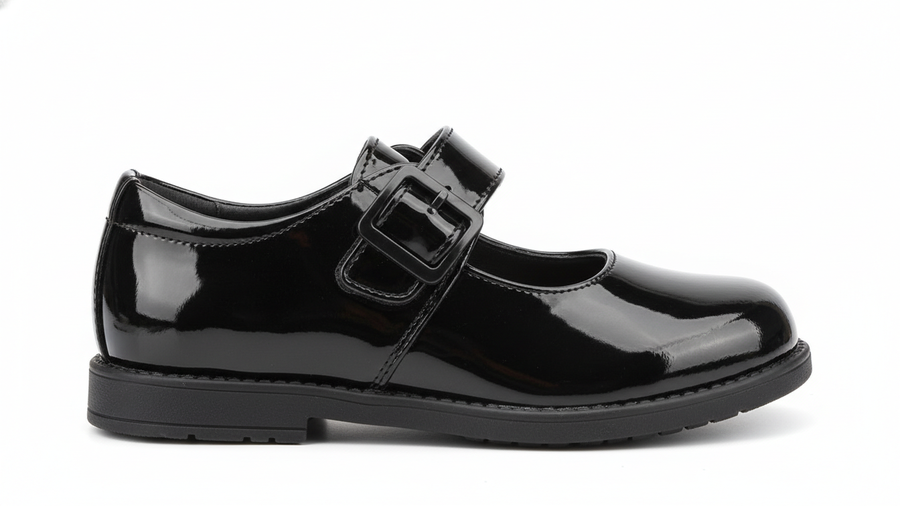
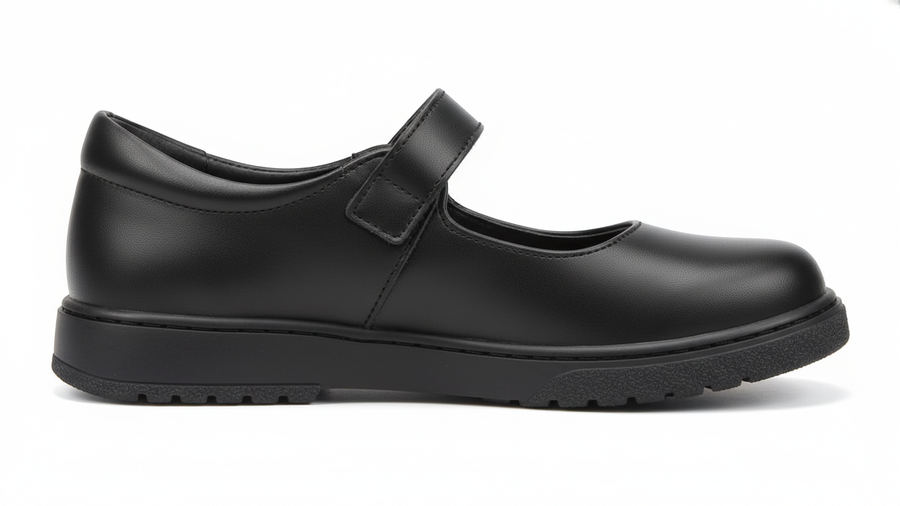
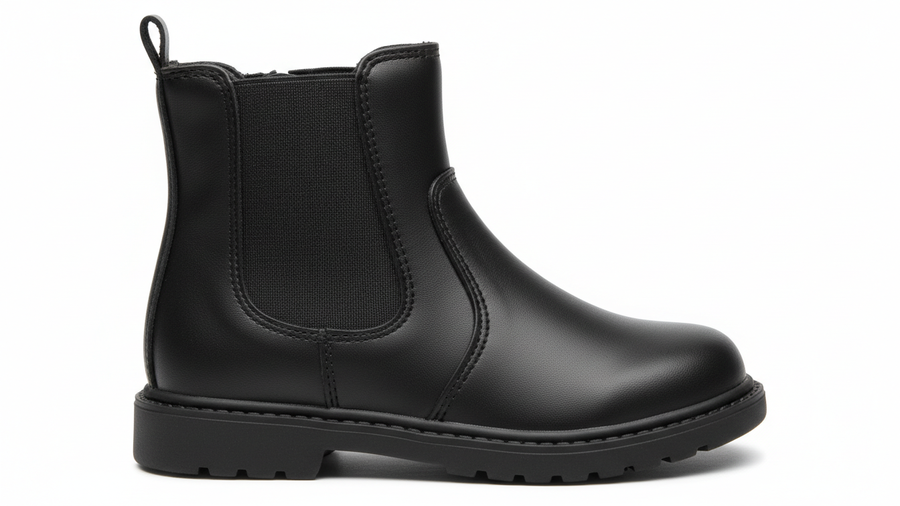
Most schools ask for a plain black, low-heeled closed shoe. Do put a secure fit before fashion; you want a shoe that stays on without your daughter having to grip it with her toes.
- Plain black leather or hard-wearing synthetic, with no logos, glitter or coloured trims.
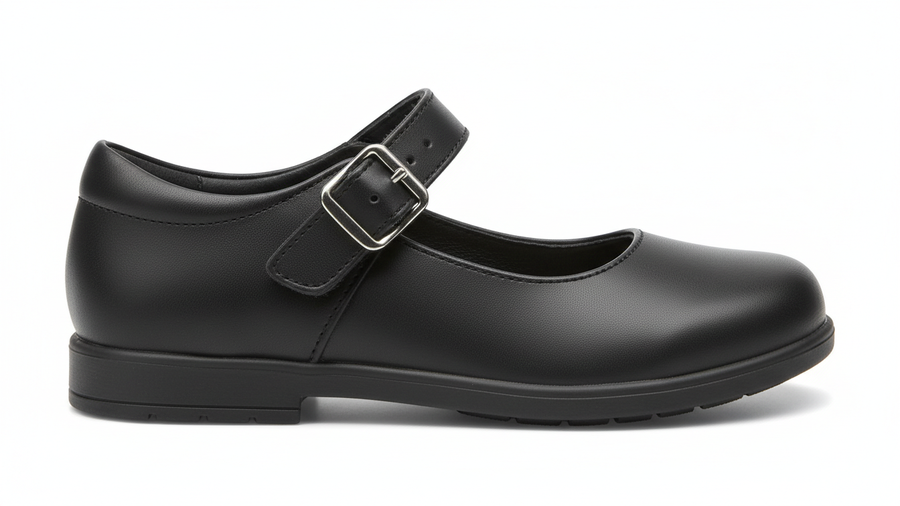
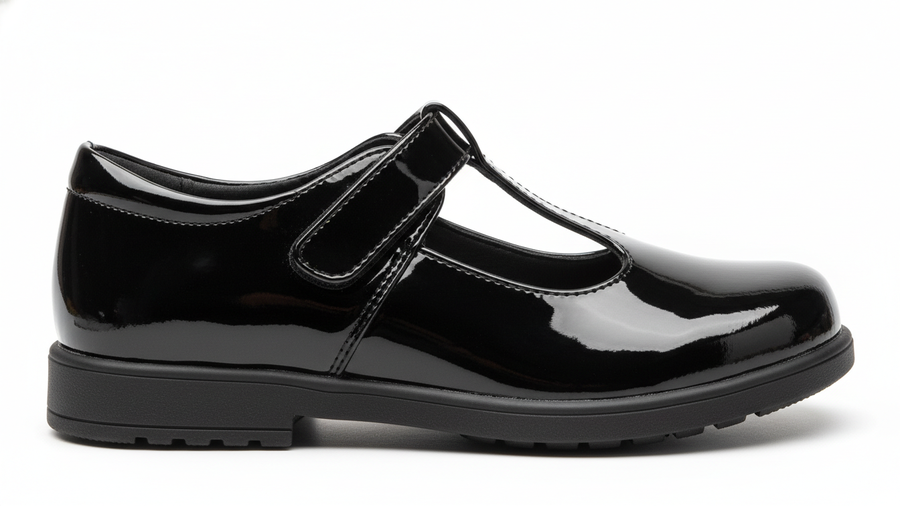
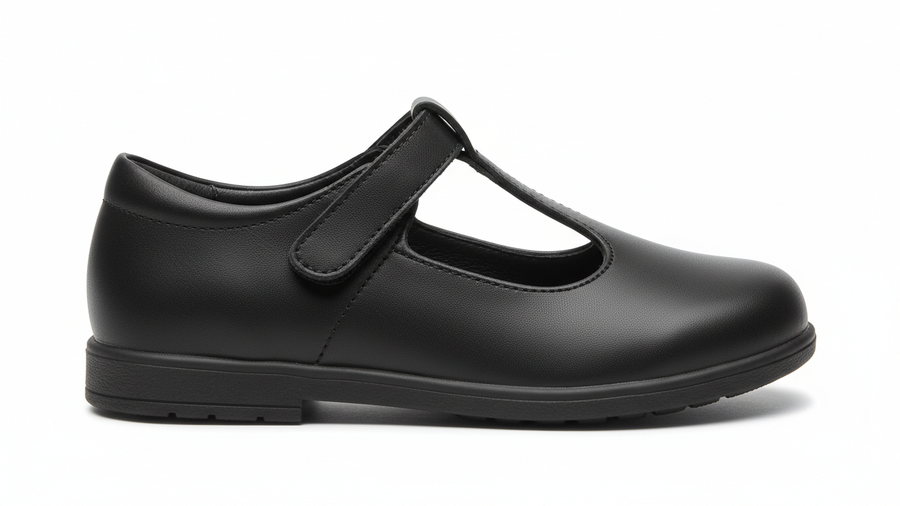
- A secure fastening, be it a buckle, a single strap (T-bar or Mary Jane) or laces, to hold the heel in place. Loose slip-ons are best avoided.
- A low, broad heel (under 4 cm). Flat or low block heels are kind to feet all day, whereas ballet pumps give very little support.
- A closed toe and heel to protect little feet in corridors, on stairwells and out in the playground.
- A cushioned, non-slip sole and a breathable lining to keep feet cool and free of rubbing.
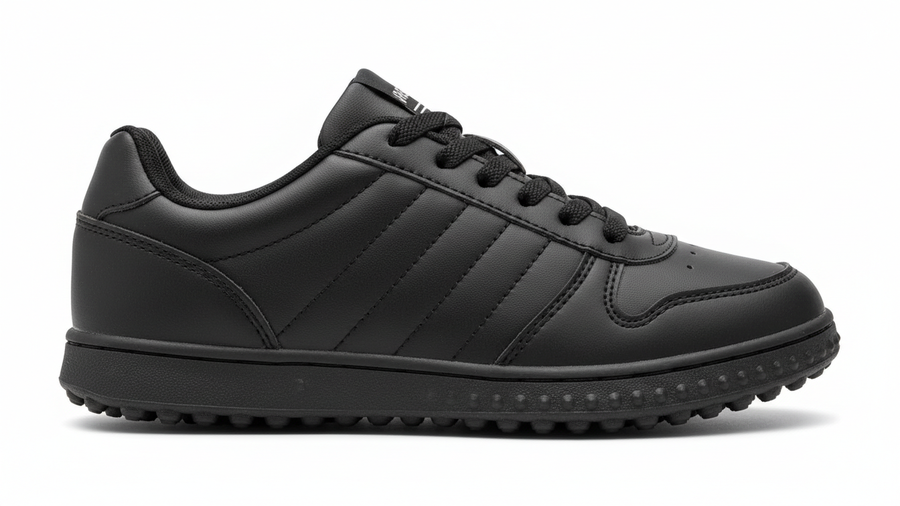
Boys’ School Shoes
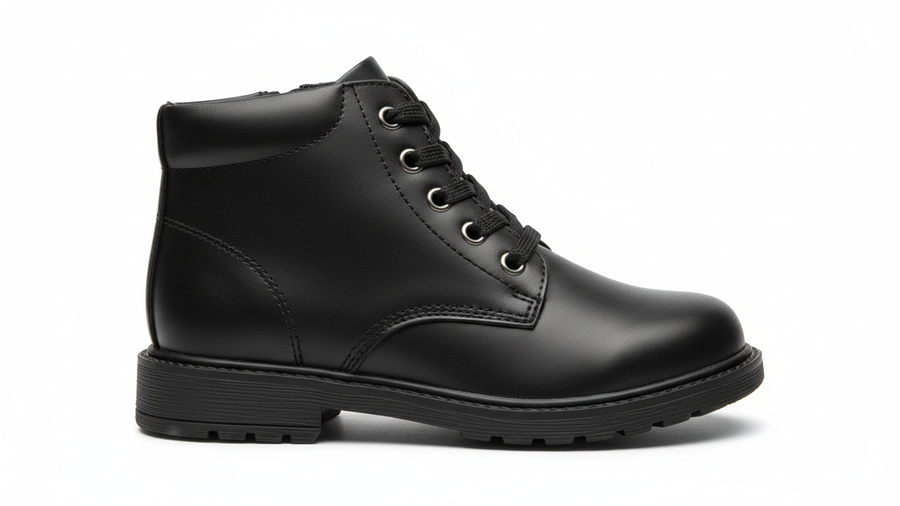
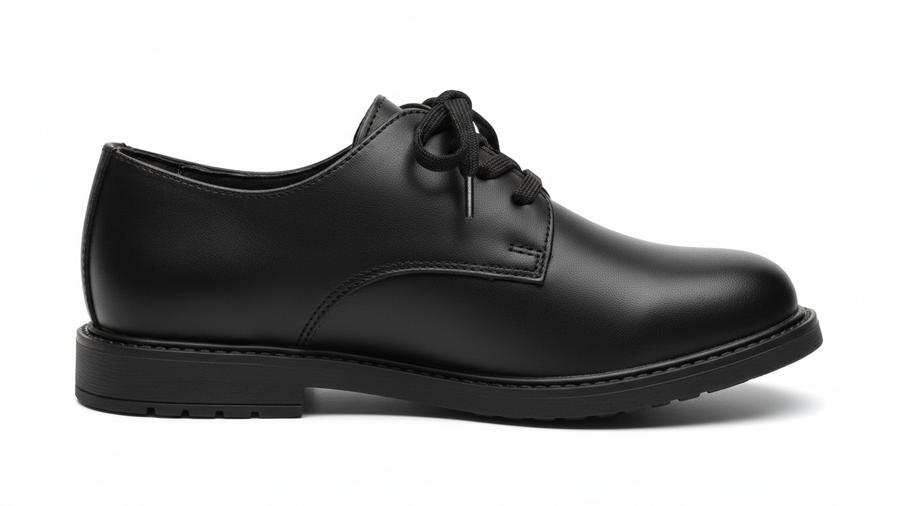
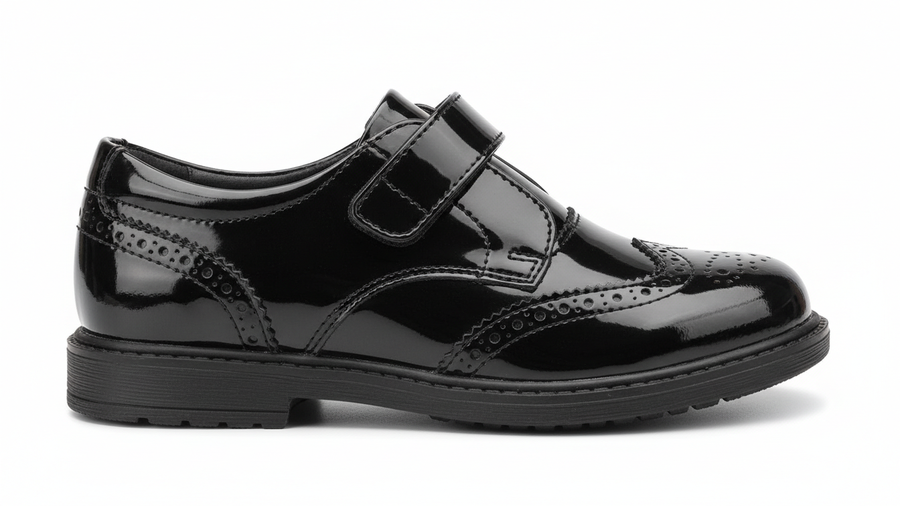
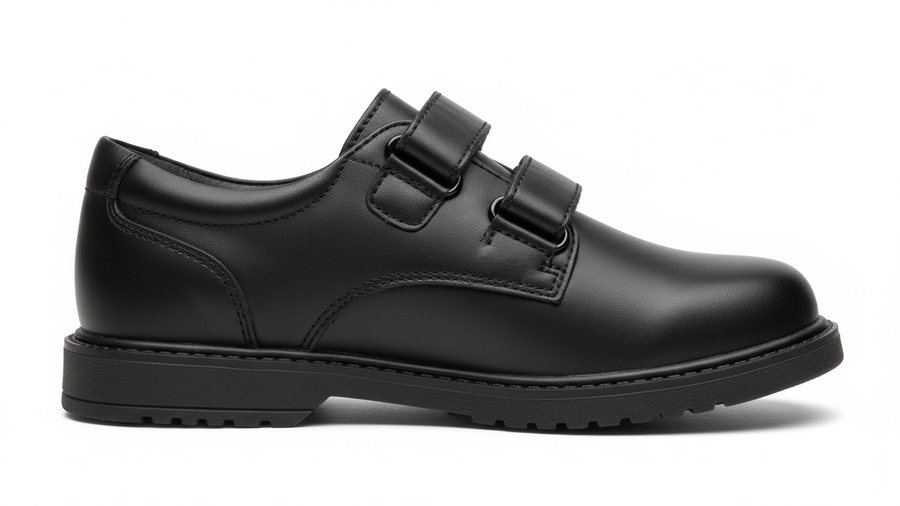
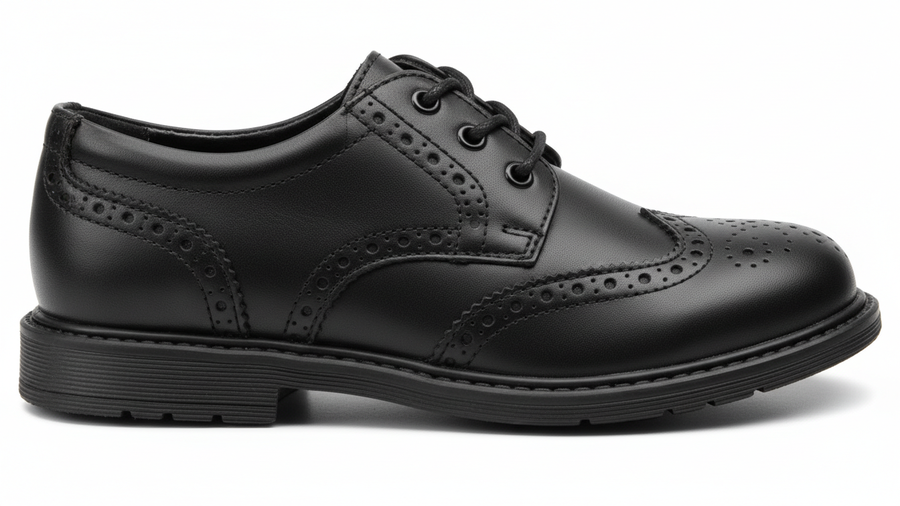
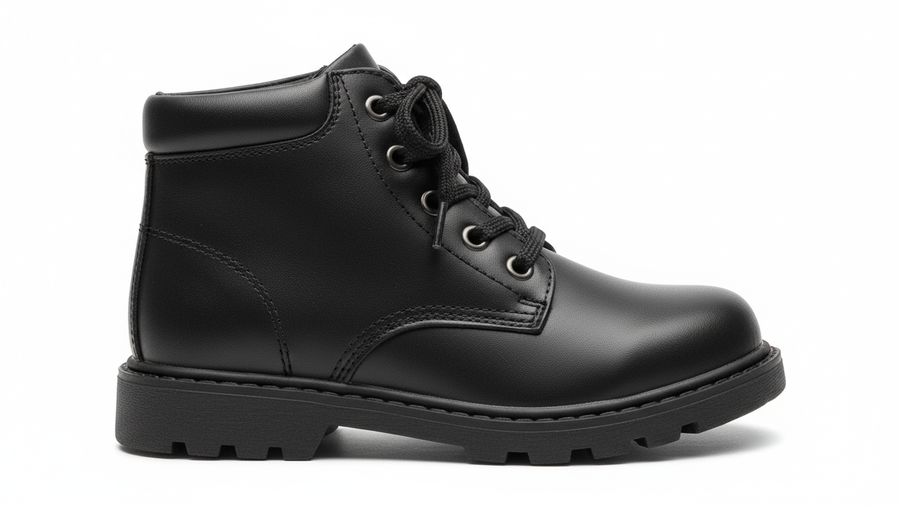
Boys do tend to be harder on their shoes, so build quality is what counts. Look for a sturdy black lace-up or twin-strap shoe that will shrug off constant playground wear.
- Plain black, with no contrast stitching, branding or sports-style detailing.
- Hard-wearing uppers; coated or scuff-resistant leather stands up best to the daily knocks.
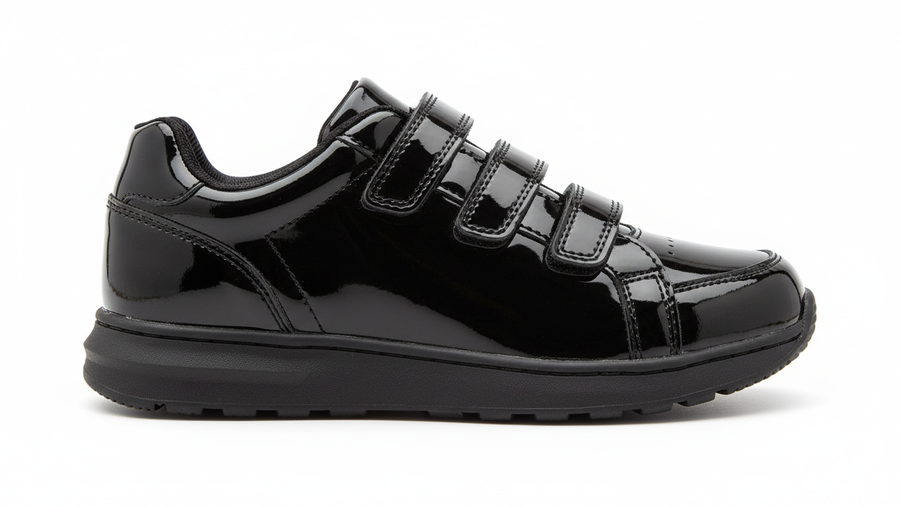
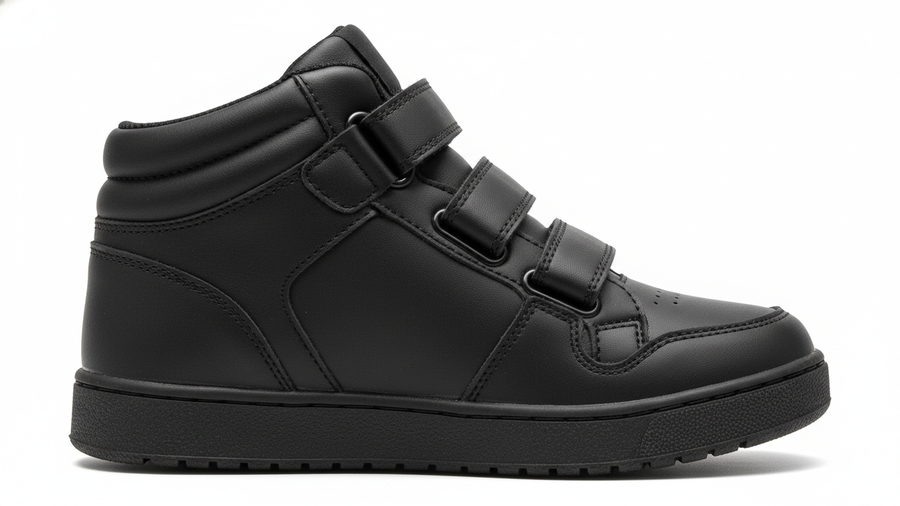
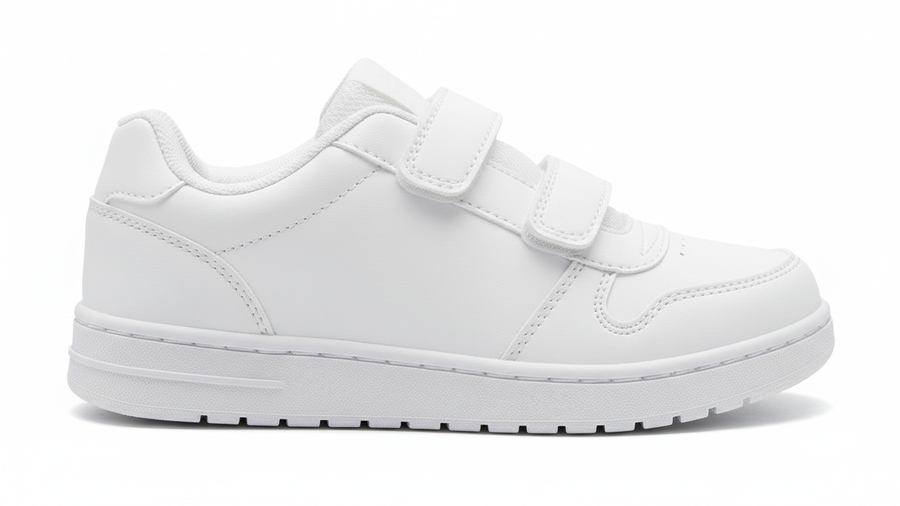
- Laces or rip-tape (Velcro) for an adjustable, secure fit. Younger ones often manage rip-tape on their own.
- A reinforced toe and a bonded or stitched sole that will not peel away or split.
- A flexible, grippy sole that bends at the ball of the foot rather than in the middle.
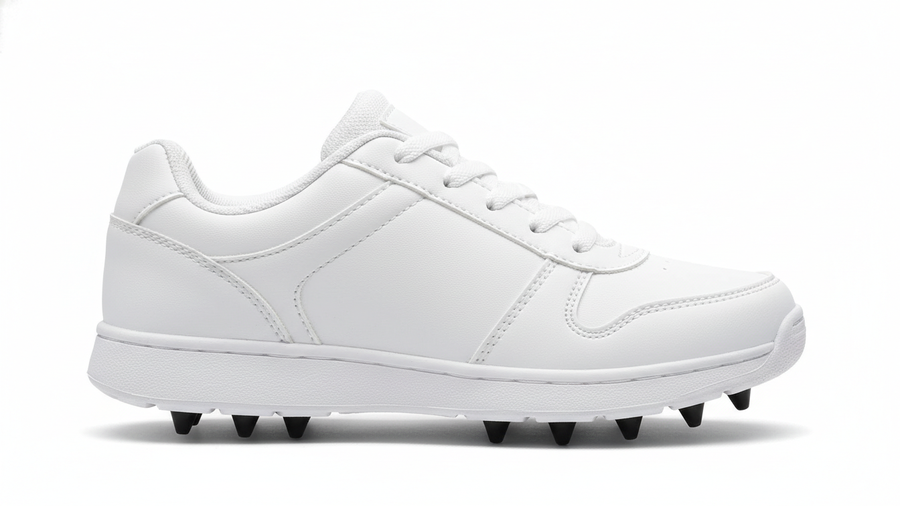
PE & Sports Shoes
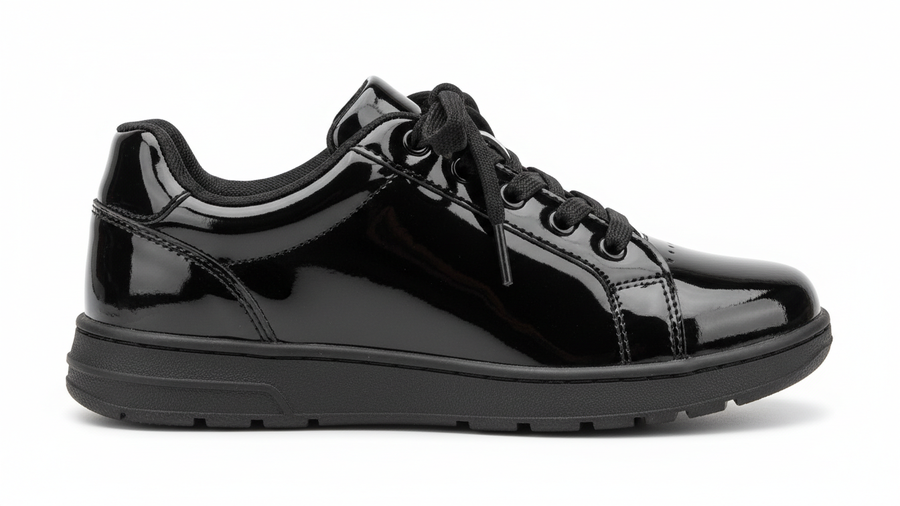
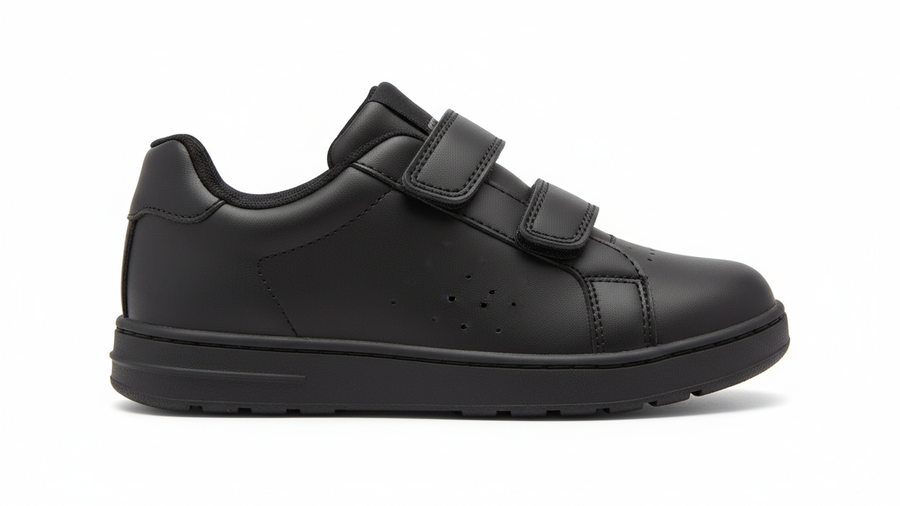
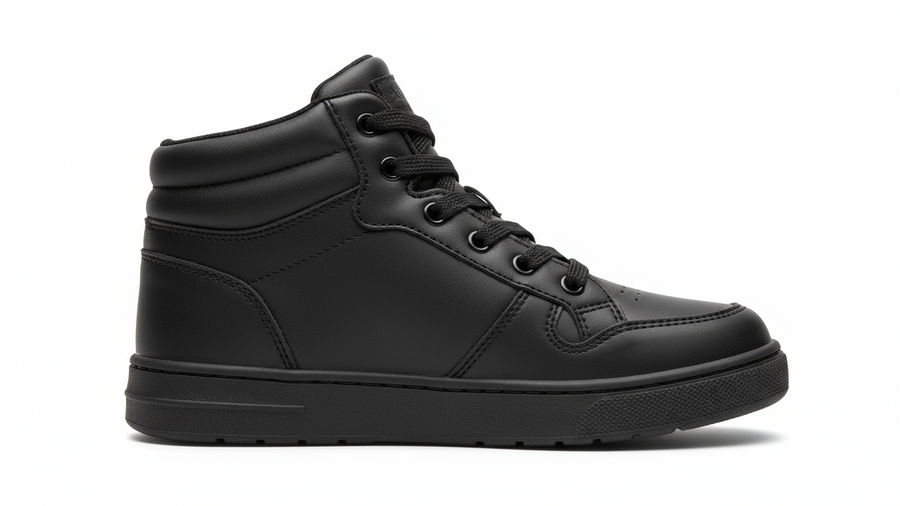
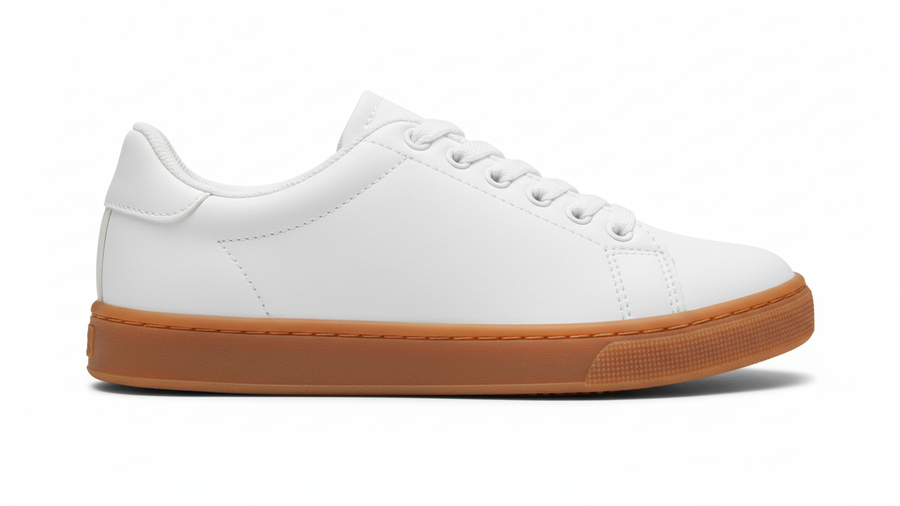
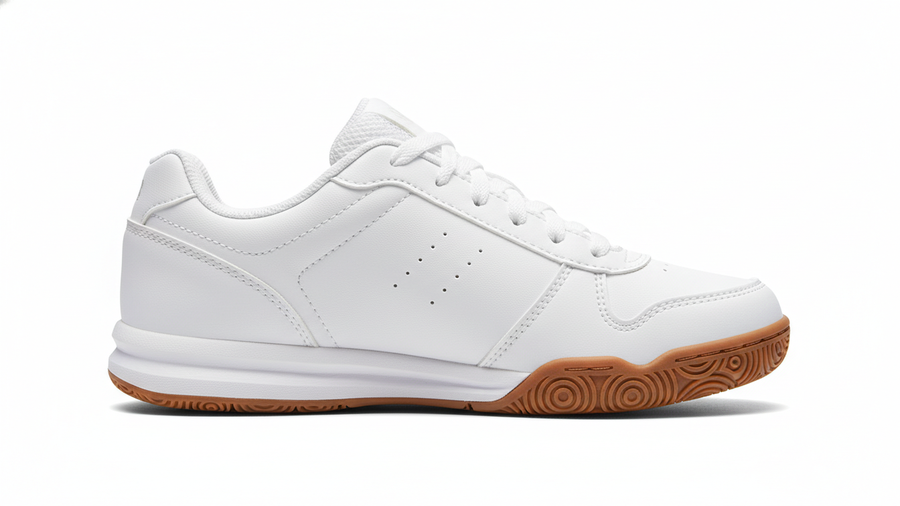
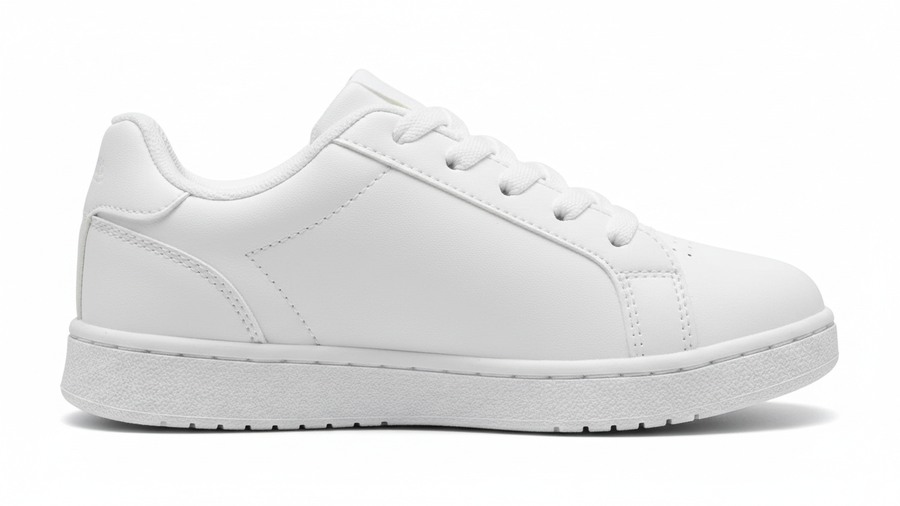
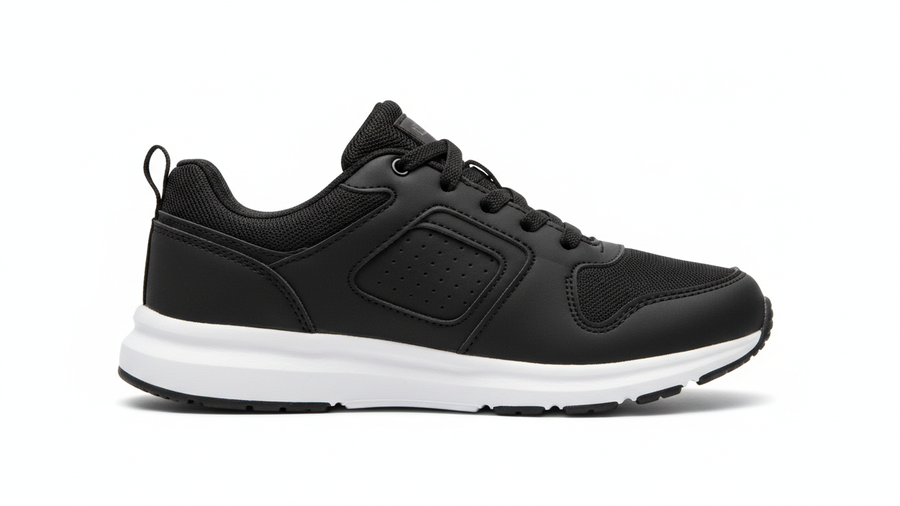
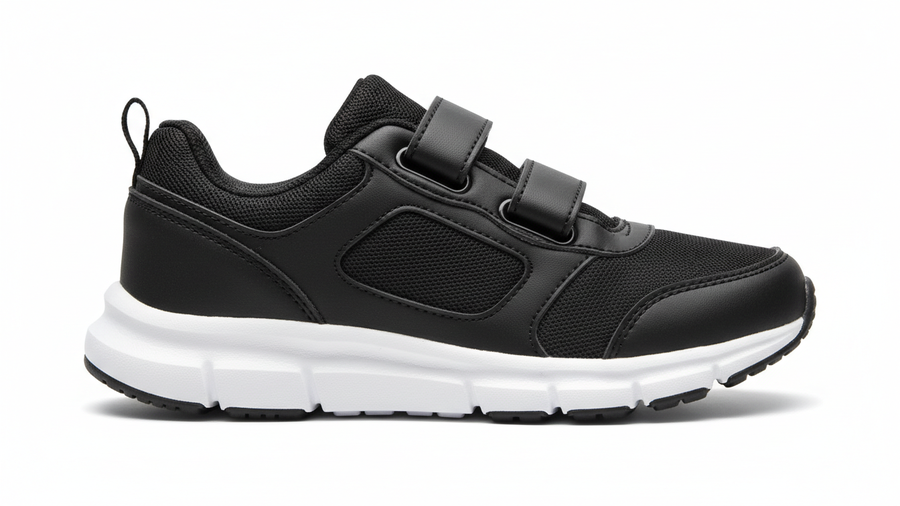
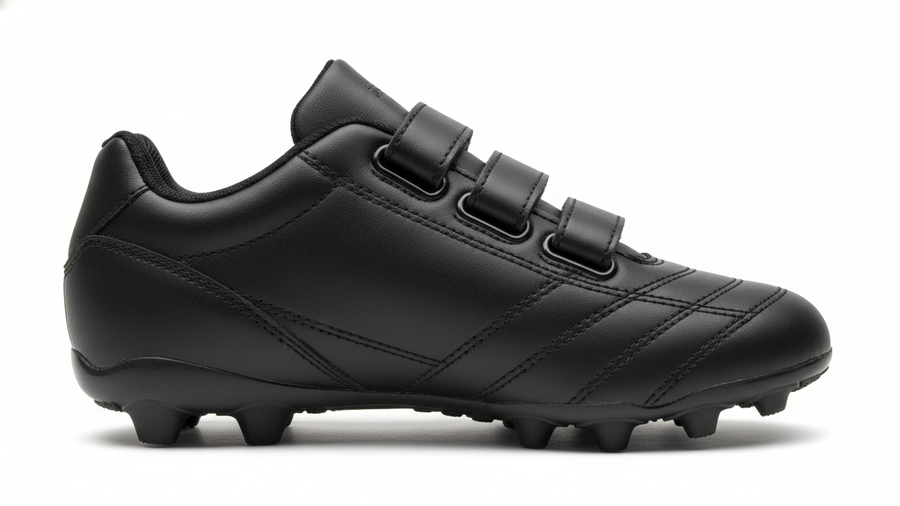
PE kit lists usually call for trainers, and sometimes football boots too. A supportive, well-fitted trainer looks after growing joints during running and games.
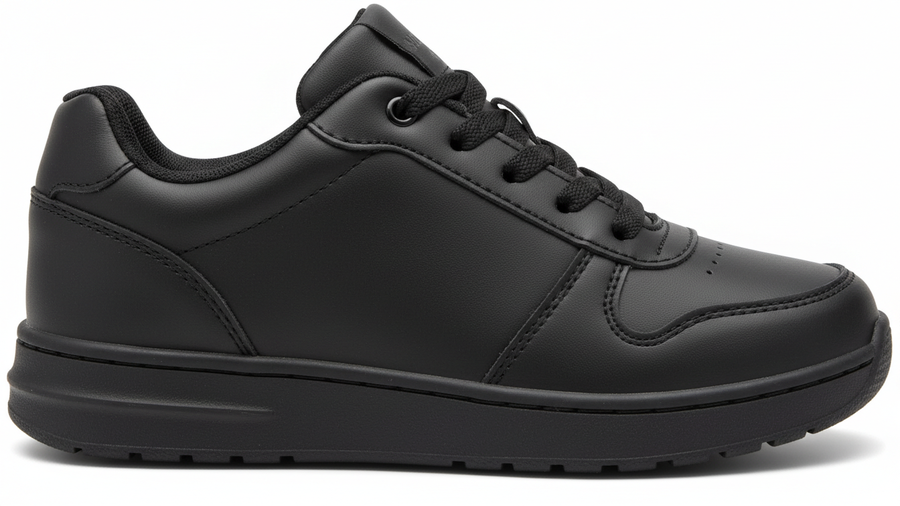
- Check the kit list first; some schools ask for all-white or all-black trainers, while others are happy with any colour.
- A cushioned, flexible sole with good grip for both indoor and outdoor surfaces.
- A lace or strap fastening so the foot is held firmly through sprints and quick changes of direction.
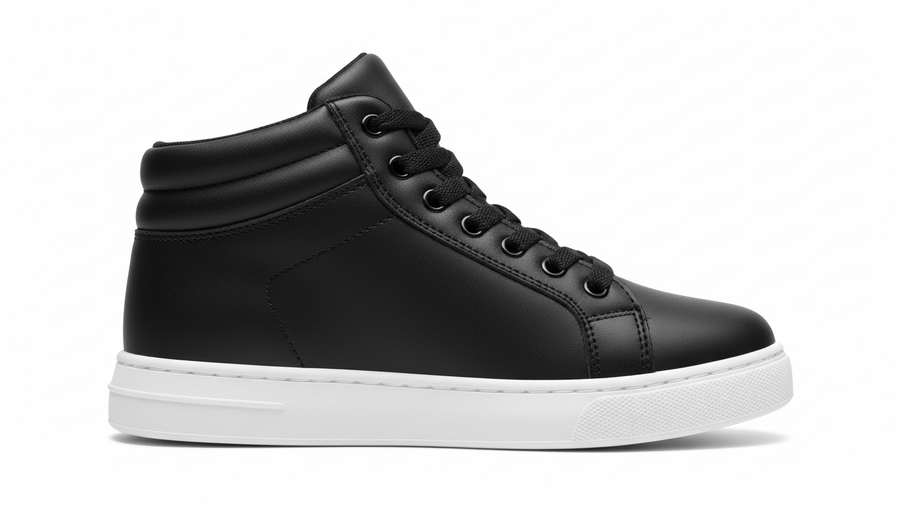
- Breathable mesh uppers, which help with heat and moisture once your child gets going.
- A thumb’s width of growing room. Trainers get hard use and tend to be outgrown quickly.
School Shoe Size & Fitting Guide
Getting the size right looks after little feet and saves you money. Treat this as a starting point and then confirm it with a proper fitting; growing room, width and depth all matter just as much as length.
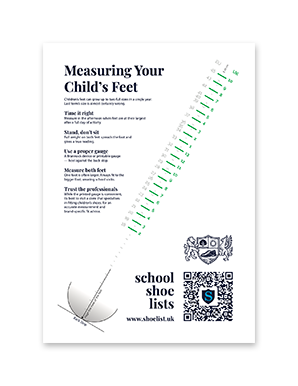
1. Measure both feet
Feet are rarely a matched pair, so always fit to the larger of the two. Measure late in the day, when feet are at their largest, with your child standing and taking their weight.
2. Allow growing room
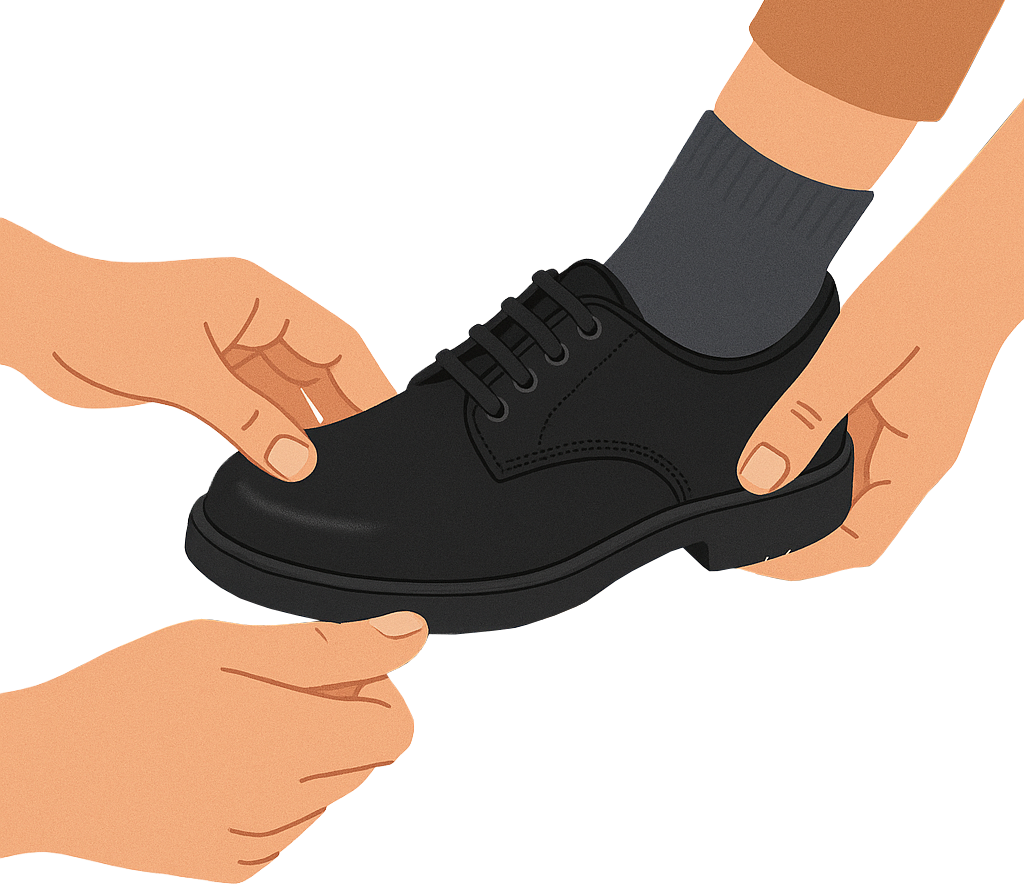
Leave roughly a thumb’s width (about 1 to 1.5 cm) between the longest toe and the end of the shoe: enough to grow into, but never so much that the foot slides.
3. Check the width & depth
The shoe should hold the foot without pinching across the widest part or pressing on the instep. Width fittings (such as F, G or H) matter every bit as much as length.
4. Test the fit
The heel should sit snugly without slipping, and your child should be able to wiggle all their toes. Always fit with school socks or tights on.
5. Re-measure regularly
Check the fit every six to eight weeks for under-fives, and roughly every three months for older children. Outgrown shoes are one of the commonest causes of foot trouble.
6. Watch for warning signs
Red marks, blisters, curled toes or shoes that keep coming off are all signs of a poor fit, so do book a re-measure straight away.
Children’s Shoe Size Conversion Chart
| UK |
EU |
US |
Foot length |
Typical age |
| 8 | 25–26 | 9 | 15.3 cm | 3–4 yrs |
| 9 | 27 | 10 | 16.1 cm | 4–5 yrs |
| 10 | 28 | 11 | 17.0 cm | 5 yrs |
| 11 | 29 | 12 | 17.8 cm | 5–6 yrs |
| 12 | 30–31 | 13 | 18.7 cm | 6–7 yrs |
| 13 | 32 | 1 | 19.5 cm | 7–8 yrs |
| 1 | 33 | 2 | 20.4 cm | 8–9 yrs |
| 2 | 34 | 3 | 21.2 cm | 9–10 yrs |
| 3 | 35–36 | 4 | 22.1 cm | 10–11 yrs |
| 4 | 37 | 5 | 22.9 cm | 11–12 yrs |
| 5 | 38 | 6 | 23.8 cm | 12–13 yrs |
| 6 | 39 | 7 | 24.6 cm | 13+ yrs |
These conversions and foot lengths are a guide only; lasts vary from one maker to the next and half sizes are common. Width and depth simply cannot be read from a chart, so a proper fitting at a local children’s shoe shop remains the only dependable way to size growing feet.
First School Shoes for Reception & Infants
Starting Reception (Year R) nearly always means buying the first pair of proper school shoes, and it is trickier than buying for an older child. Four and five year olds cannot reliably tell you whether a shoe fits, their feet are still soft and changing shape, and most of them cannot yet manage laces. Here is what genuinely matters for that first pair.
What size are Reception, infant and toddler school shoes?
Children’s shoes are sold in two runs. Infant sizes go from UK 0 to 13 and cover toddlers right through the infant years, then junior sizes begin again at UK 1. That catches a lot of parents out: infant school shoes in size 7 fit a nursery-age foot, whereas a junior 7 belongs on a secondary pupil. Most children starting Reception measure somewhere around a UK 8 to 10, though the spread across a single class is wide and perfectly normal.
| UK infant size |
EU |
Foot length |
Typical age |
Usual stage |
| 4 | 20 | 12.1 cm | 12–18 months | Early walker |
| 5 | 21–22 | 12.9 cm | 18–24 months | Toddler |
| 6 | 23 | 13.8 cm | 2 yrs | Toddler / nursery |
| 7 | 24 | 14.6 cm | 2–3 yrs | Nursery |
| 8 | 25–26 | 15.3 cm | 3–4 yrs | Nursery / Reception |
| 9 | 27 | 16.1 cm | 4–5 yrs | Reception (Year R) |
| 10 | 28 | 17.0 cm | 5 yrs | Reception / Year 1 |
| 11 | 29 | 17.8 cm | 5–6 yrs | Year 1 |
| 12 | 30–31 | 18.7 cm | 6–7 yrs | Year 2 |
| 13 | 32 | 19.5 cm | 7–8 yrs | Year 2 / Year 3 |
Age is only ever a rough guide. A child needing Reception school shoes in size 4, 5 or 6 simply has smaller feet than average, which is nothing to worry about; the shoe has to fit the foot rather than the year group. Never size up beyond a thumb’s width to make a pair last longer either, as an oversized shoe makes a child trip and curl their toes to hang on to it.
First School Shoes for Girls
For a Reception or toddler girl, the priority is a shoe she can get on and off unaided at PE time, and one that stays put in the playground.
- Rip-tape (Velcro) over buckles. A single wide strap she can fasten herself saves a great deal of classroom time and frustration.
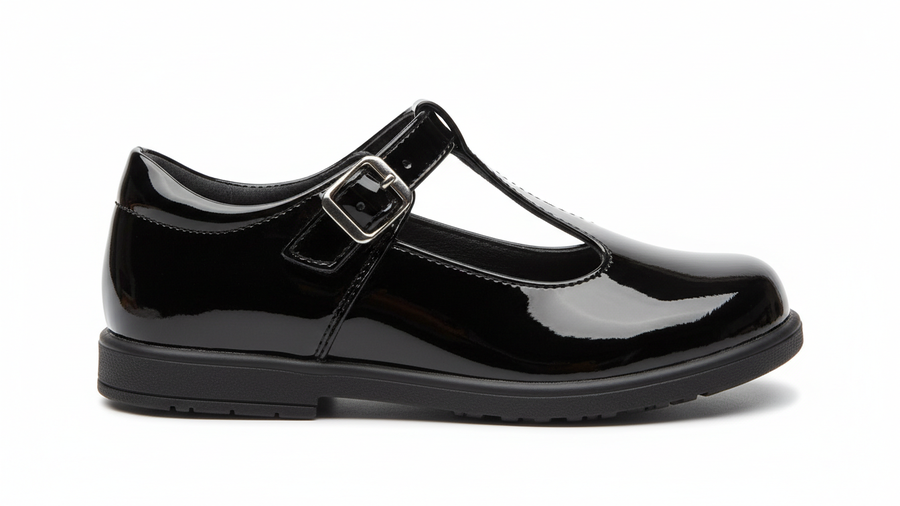
- T-bar and Mary Jane styles hold the foot well, but check the strap sits across the instep rather than slipping down.
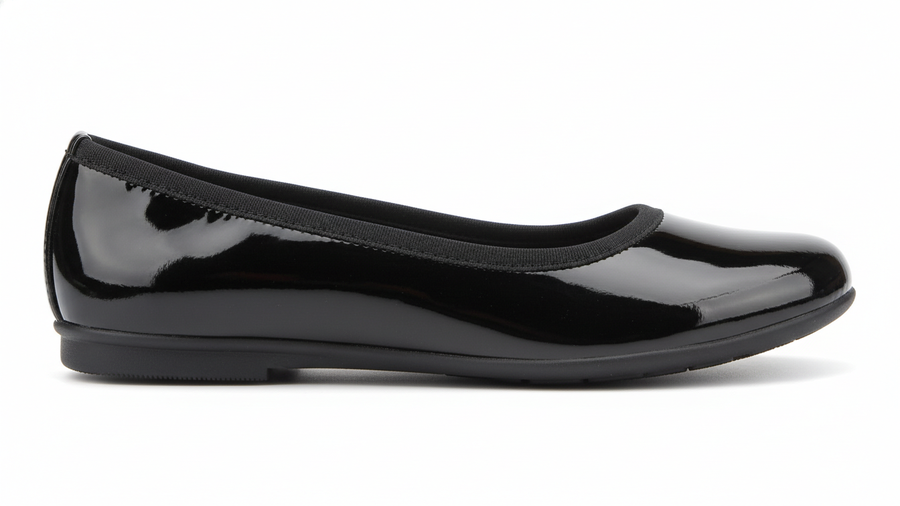
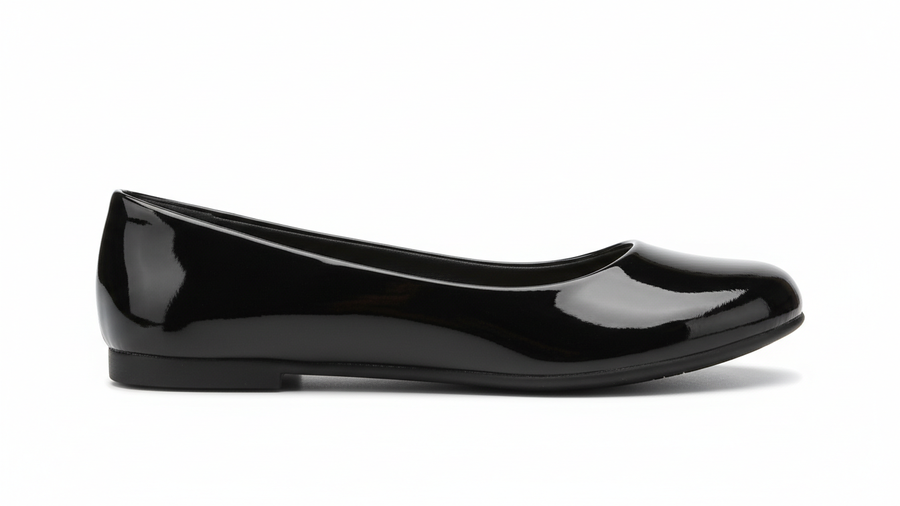
- Flat, not a pump. Ballet-style flats look smart but give almost no support for a full day on her feet.
- Ask about width fittings. Girls’ styles are often cut narrower, so an F, G or H fitting can be the difference between comfort and blisters.
Browse girls’ school shoes
First School Shoes for Boys
Toddler and Reception boys are usually tough on footwear from day one, so pick for durability and an easy fastening rather than a grown-up look.
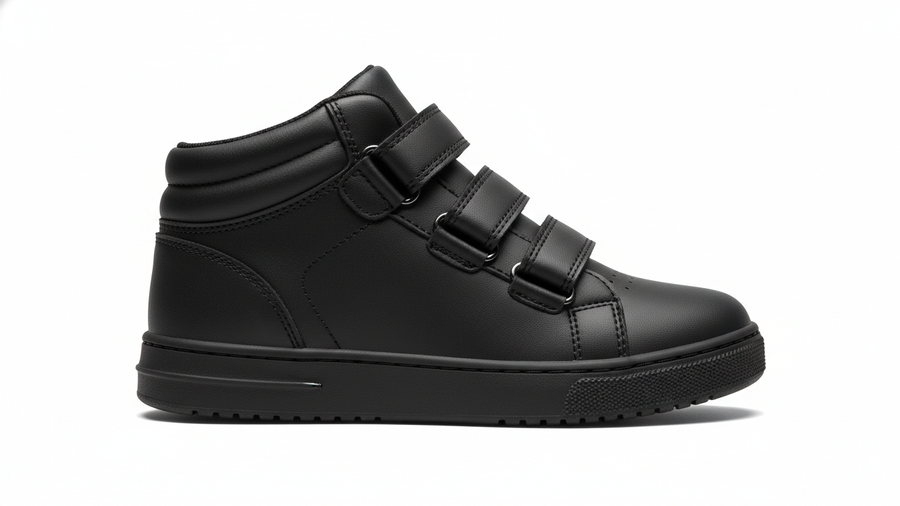
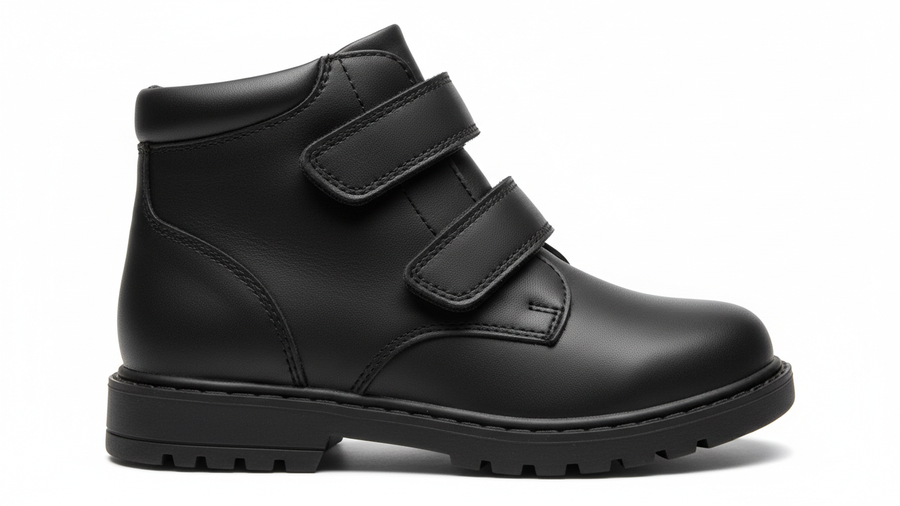
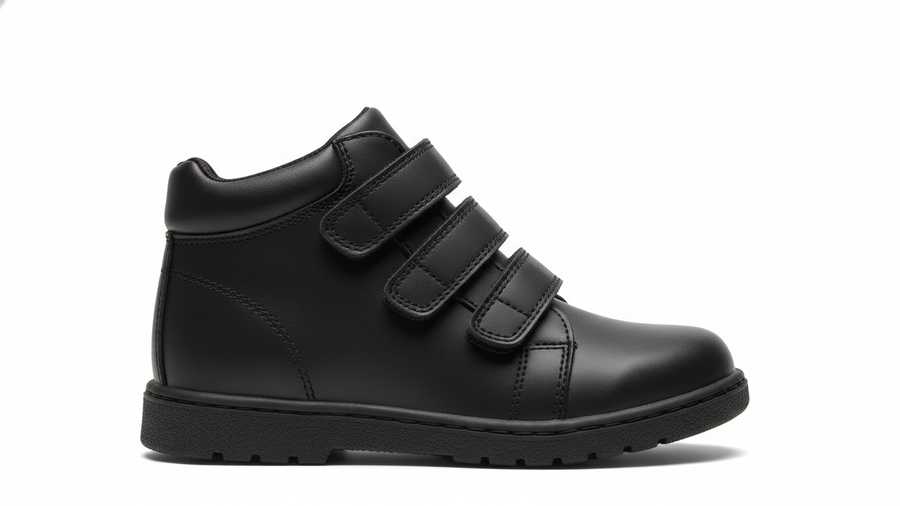
- Twin rip-tape straps give the most adjustment and are far more practical than laces at this age.
- A scuff-resistant or coated toe survives kerbs, footballs and the walk down the corridor.
- Lightweight soles. A heavy, stiff shoe tires small legs; it should bend at the ball of the foot, not the middle.
- Room in the depth. Chunkier feet need a deeper fitting, which a length-only measure will miss entirely.
Browse boys’ school shoes
What makes the best first school shoes?
They can fasten them alone
Reception children change for PE without much help. A shoe your child can manage on their own is worth more than any brand name.
Measured for width and depth
Under-fives have soft, fatty feet that a length measurement alone describes poorly. A proper fitting checks the girth and instep too.
Leather or wipe-clean uppers
They breathe, they mould to the foot and they survive puddles, paint and the mud kitchen far better than fabric.
Light and flexible
Little feet are still developing. A flexible sole lets the foot move naturally rather than splinting it in place.
Named and plain black
Almost every school asks for plain black without logos or lights. Write your child’s name inside both shoes before the first day.
Plimsolls on the kit list
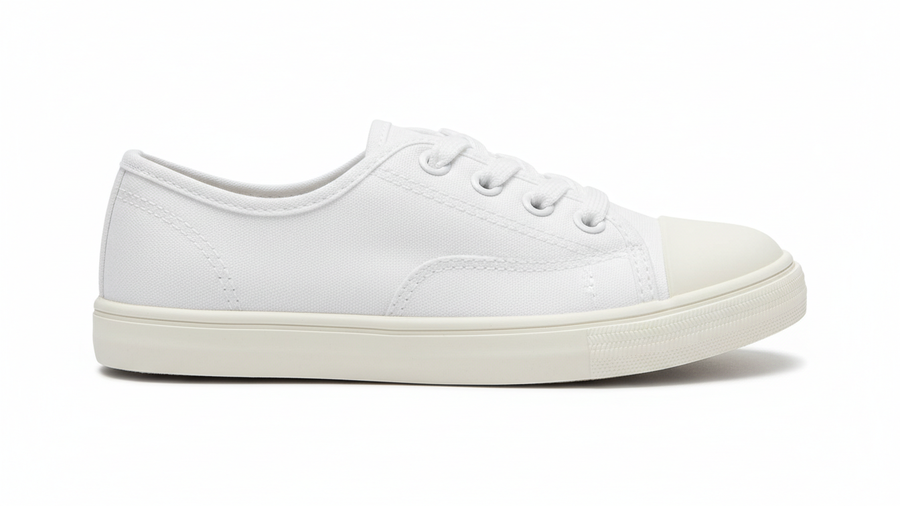
Reception PE usually needs plimsolls or pumps as well. Check the school shoe list so you buy both in one trip.
Buying first school shoes in the sales
Summer sales are tempting, but a Reception-age foot can gain a full size between July and October, so a bargain bought early in the holidays may not fit come September. If you do want to make the most of a sale, get your child measured first, buy as close to the start of term as you can manage, and put the saving towards a second pair rather than a larger size. Two pairs worn on alternate days dry out properly overnight and, between them, outlast a single pair comfortably.
Do also check whether your school runs a uniform swap or second-hand rail. Outgrown infant shoes are often barely worn, since children tend to grow out of them long before they wear them out.
Older Girls’ School Shoes
Buying for an older girl is a different problem entirely. By Year 6 or 7 she has firm opinions about how her shoes look, the uniform policy has usually tightened up, and the shoe has to survive a walk to school, a full timetable and a good deal of standing about. Whether your school calls itself secondary, senior or high school, the trick is the same: finding something a teenage girl will actually agree to wear that still passes a Monday morning uniform check.
Styles that look right and stay within policy
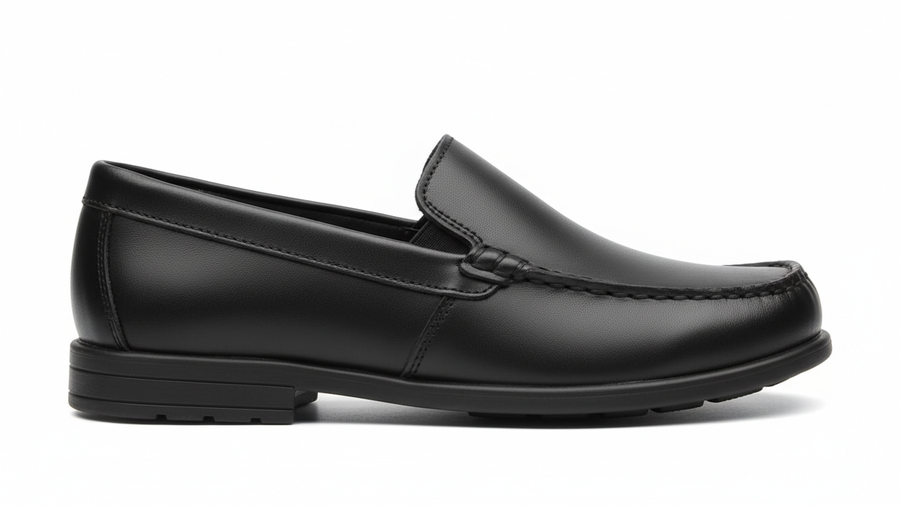
Loafers
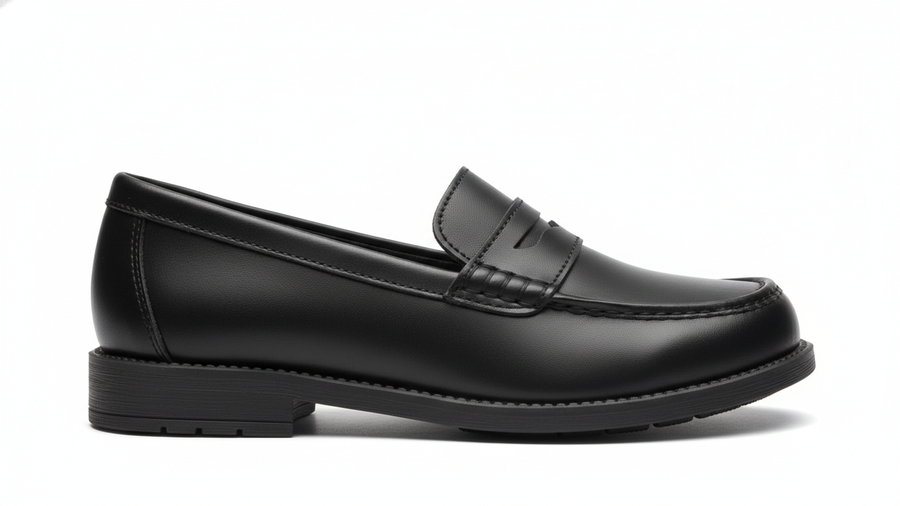
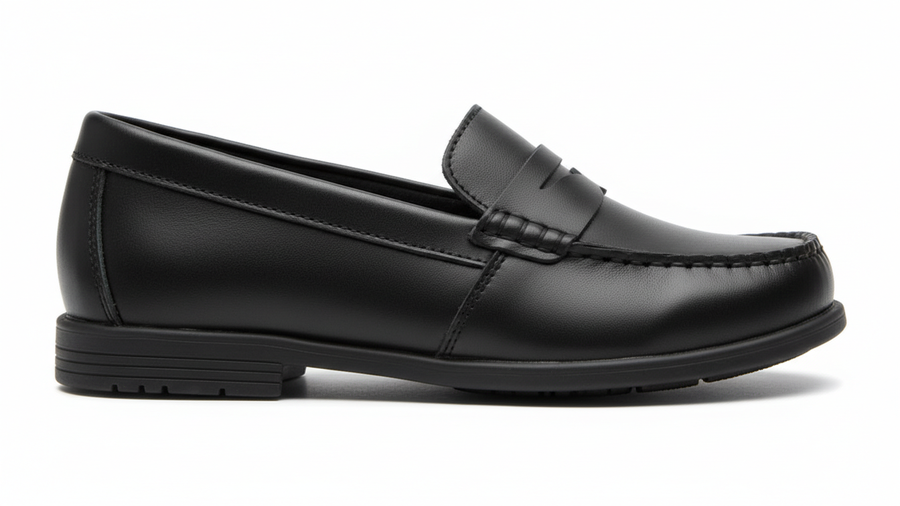
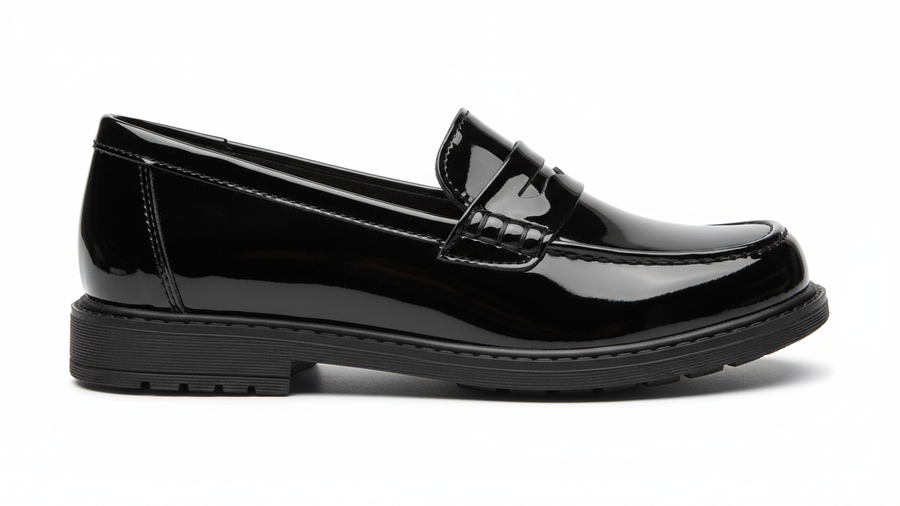
Far and away the most requested style. Girls’ school loafers in plain black leather suit almost every policy, and a slightly chunkier sole reads as current without looking like a trainer.
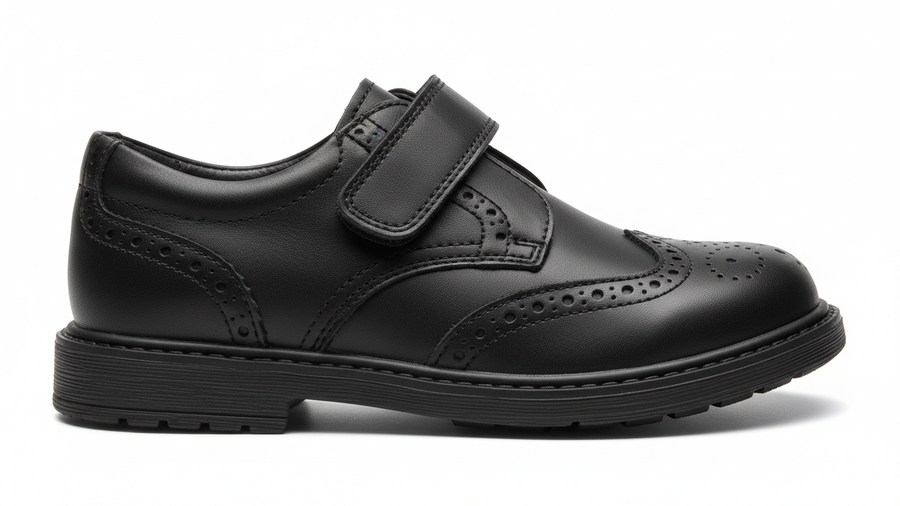
Brogues
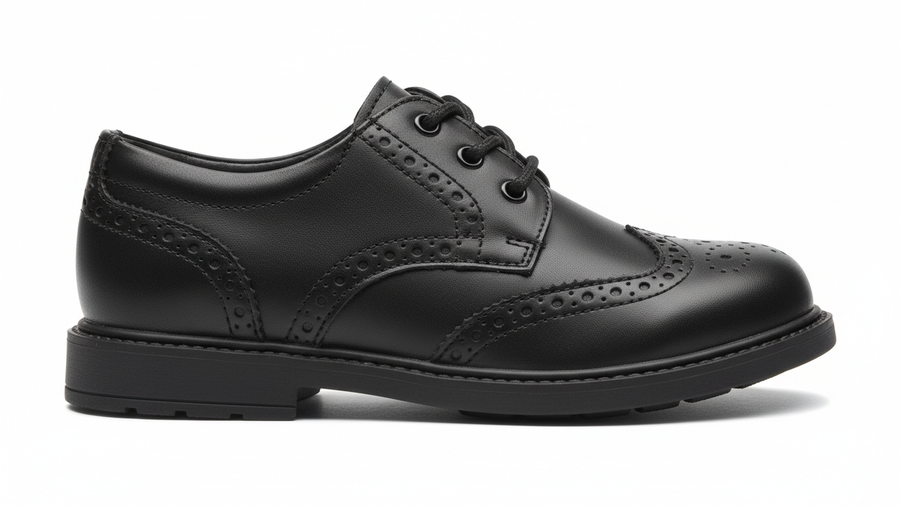
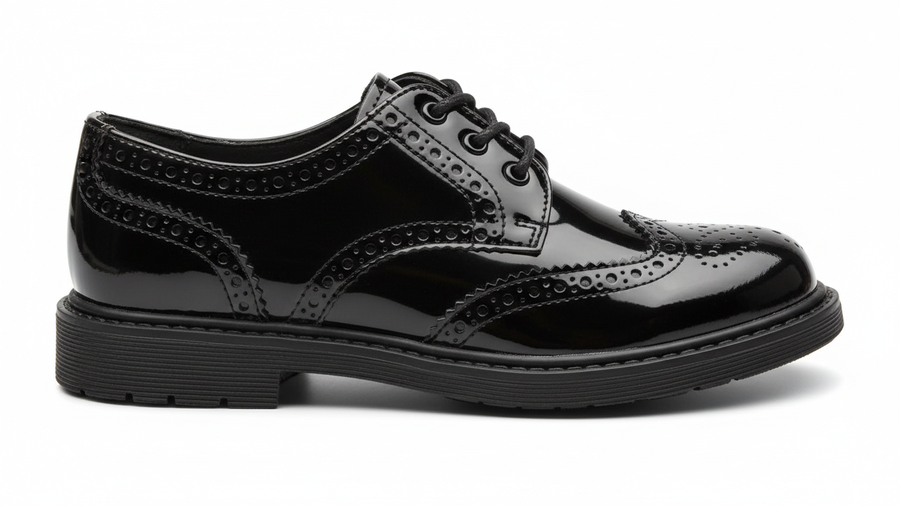
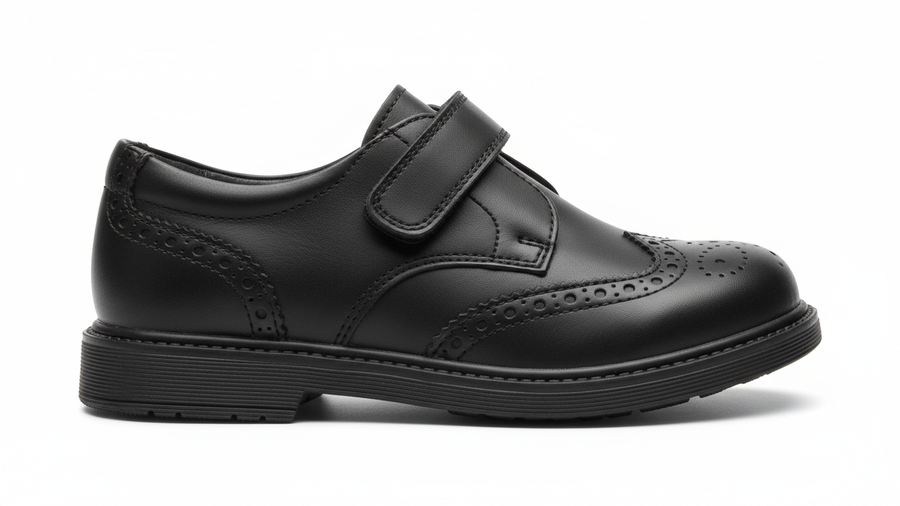
Smart and hard-wearing. Check the punched detailing is the same black as the upper, since some schools count contrast stitching or a coloured sole as decoration.
Derby & Oxford lace-ups
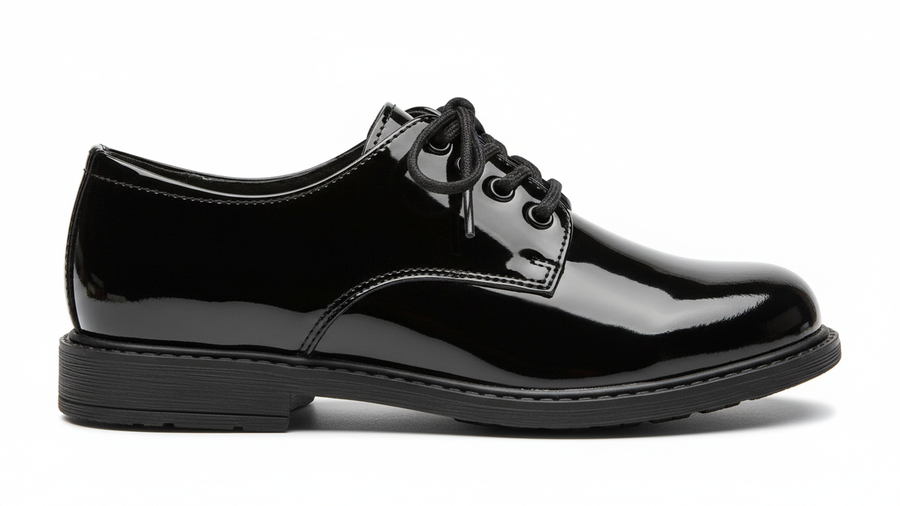
The safest choice of the lot, and usually the most comfortable for a long day. Black laces only; most policies say so explicitly.
T-bar & Mary Jane
The strap keeps the heel in place better than a slip-on, which matters if she walks any distance. Grown-up versions come with a low block heel.
Ankle-strap flats
A neater alternative to a ballet pump with a good deal more security. Look for a proper sole rather than a thin, glued-on one.
What to steer clear of
Black trainers, canvas, backless mules, platforms, wedges and anything with a visible logo. These are the styles most often turned away at the gate.
How high can the heel be?
Most secondary schools allow a heel of up to roughly 3 to 4 cm and insist it is a block or low stacked heel rather than a stiletto or a platform. A few sixth forms are more relaxed, and a few schools ban heels altogether, so the wording in your own uniform policy is the only thing that counts. As a rule of thumb, if the shoe changes how she walks, it is too high for a school day.
Moving into adult sizes
Girls’ feet usually finish growing between about 13 and 15, and somewhere around a UK 4 to 5 the choice widens from the children’s range into women’s black school shoes. It is worth knowing the crossover, because adult lasts are cut on a different shape: narrower through the heel, shallower over the instep and rarely offered in width fittings. A girl who has always needed a wide fitting may well be more comfortable staying in a senior children’s range at UK 5 or 6 than moving into women’s school shoes at the same nominal size.
The upside is that once her feet have settled, a properly made leather pair can reasonably last a whole school year, so this is the point at which spending a little more genuinely pays off. Half sizes also become widely available in adult ranges, which is worth using if she falls between two sizes.
Comfort over a full school day
Older pupils are on their feet far more than younger ones, moving between blocks and standing in corridors, often carrying a heavy bag. A leather lining that breathes, a cushioned insole and a sole with some give will do more for her comfort than any brand name. If she walks or takes the bus to school, check the sole grips properly in the wet; a smooth leather sole is treacherous on a tiled corridor floor.
Blisters in the first fortnight of term nearly always mean the shoe is the wrong width or depth rather than the wrong length, so it is worth a proper re-measure rather than simply going up a size.
More on secondary & senior school shoes